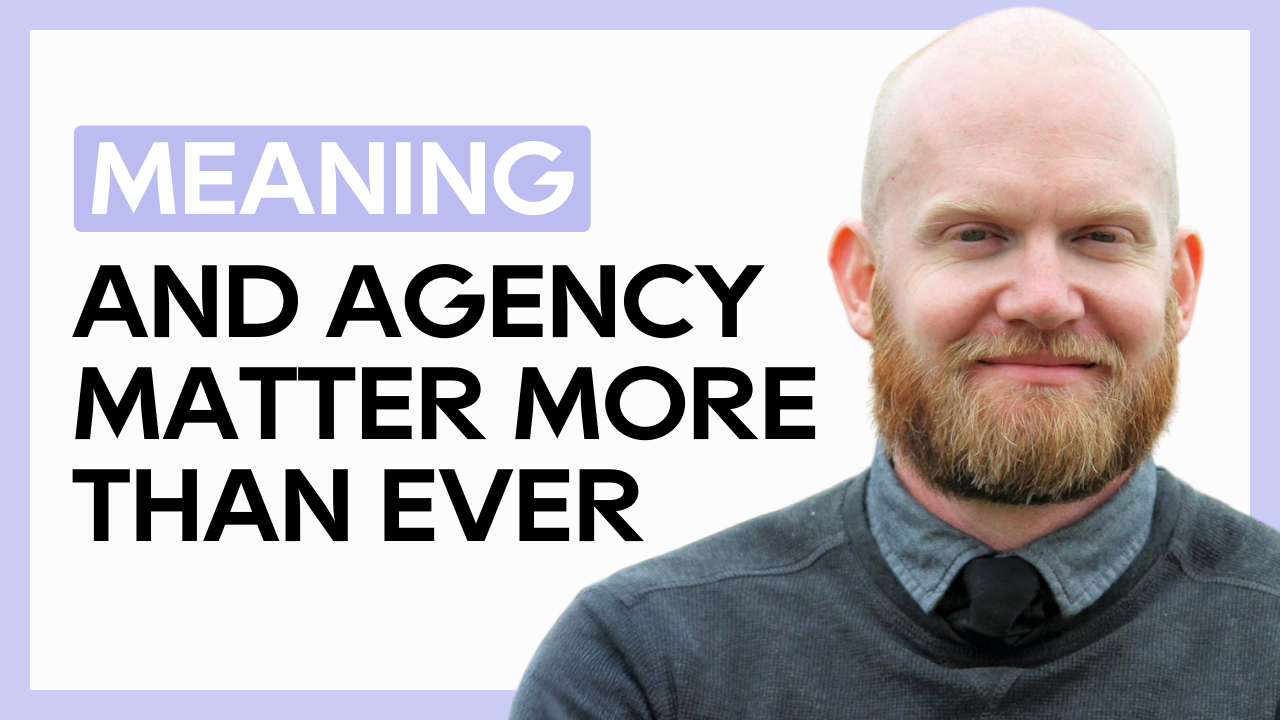
Anna Gát, founder of the Interintellect community, joins us to explore the essential role of hopeful action and diverse communities in shaping the future. Anna shares why she started Interintellect as a space for intellectual inquiry free from political polarization and traditional gatekeeping, driven by the hope that constructive social collaboration is possible. She details the specific rules of gathering and hosting that can make online and offline groups successful, fostering deep, non-toxic, and life-changing conversations across polarizing topics.
We also dive into the genesis of Anna's own podcast, The Hope Axis, and her frustration with the prevalent "complaint culture" and regressive narratives in wealthy societies.
The conversation also touches on these questions:
Beatrice: I’m very excited to be joined today by Anna Gát, who runs the Interintellect community, which we're going to dive into and talk a lot more about today. But you’re also running a podcast called The Hope Axis. And so I thought it would be fun to have a little hope overlap collab or something here, as we both run projects that have the name Hope in the title. So, maybe we’ll just start with: Could you share what the word hope means to you, or why did you start the Hope Axis podcast?
Anna: Sure. So I know that talking about hope is not maybe the most obvious thing to do for Eastern Europeans. We are mostly known for very slow black and white movies with prominent, very set classical music playing in it, preferably Bartók, but it can be any other suicidal-themed violin concerto. We also produce extremely depressing literature, and sometimes win Nobel Prizes from Sweden. Thank you. And so we are not really known for the most uplifting stuff ever.
But for me personally—and maybe this is why I became such a vagabond persona, having lived around Western Europe in multiple different countries and now in America—for me, hope is maybe the most exciting question of all.
When I started Interintellect, which actually is a little bit more than a community, it's a marketplace for events for intellectuals. Without any kind of traditional gatekeeping or political polarization, anybody who is obsessed with ideas and wants to figure things out and build something, can come and build their community. They can run events, make a name for themselves, and earn a living on Interintellect. We also have a community tier for people who basically live for this, but other people just come for one event or a series. I like that kind of openness.
Interintellect both came out of my hope that... I immigrated from Hungary mostly because of political reasons. I was very unhappy with how closed the society was becoming and how it was stifling speech and inquiry. But after I had moved to the UK and I started working with Americans, I started seeing similar processes happening elsewhere as well. And so I had the hope, or maybe fear, or the good productive combination of hope and fear, when you're frustrated but determined enough to do something about it. You have a moment of absolute hubris when you're sitting on your bed in your pajamas and think, "I should do something about it". You look at some huge historical problem and think, "What if I contributed this solution?" I think all solutions come out of the contributions of little guys like myself. The world is where we take it, how we shape it.
So I got up from my bed. I'm still in my pajamas, so that didn't change. But almost everything else around my life since then has changed. And first started building Interintellect to be this cultural center of the world, basically. At first I had a little hope, and as I started building it, I started having a lot more hope about how people can discuss things. How curious and open-hearted they are. How deep the relationships that they are able to form online and offline can be. I always say that I was almost like a misanthrope when I started Interintellect. And now I just love people so much because people completely changed my opinion about them through my own platform.
I came to greatly distrust fearmongering in the media because everything is always a problem and everything is toxic, and it's always a crisis everywhere—of course, that is the thing that sells newspapers and very bad nonfiction books. That has not been my experience. My experience has been much more participatory, with people just coming together and putting in the effort, and then maybe just a little change, but something will happen. So Interintellect definitely comes out of this optimistic science fiction of social collaboration.
It also focuses on bridging generational divides, which are so prominent. The America versus the world divide, and the divide between men and women—we live in an era where men and women are often on even different political sides. The political sides can come together, as can other cultural dichotomies like culture and tech. These are two groups who gravely distrust each other, especially in the AI era. I continue putting on programming and helping hosts on my platform who can balance out these voices and say, “Okay guys, we all are trying to create a better future somehow”. We are all doing it in our little ways. Some people are just keeping a beautiful home and welcoming their families for lunch—that’s a great contribution to social well-being on a small scale. And some people are building multi-billion dollar companies. I almost don’t care about the scale. I think they should stay where they are often, and we can learn from each other. But if the intention is there, I believe that communication also can be there.
Beatrice: Very interesting. Could you tell us a bit more about Interintellect? What is it, why did you start it, and how does it work?
Anna: The first couple of years for Interintellect, so between 2016 and 2019, went through a variety of different experiments and trials. At the time I was working—I basically worked for 12 years as a screenwriter and a playwright working on dialogue between fictional people. I also built a couple of organizations because I'm a busy body. For example, I built Hungary's biggest women’s rights platform under Orbán’s nose. I like to entertain myself with things.
Then I immigrated, I went to the UK, and I thought, “Okay, I will just have this very introverted life”. I would write and be a woman of letters at my desk at home. Then the world started falling apart. I thought, first of all, “I've already seen this happening in another country. I have to do something about it”. Also, it felt super dumb to me that we have basically, since Aristotle, complete knowledge about how to write dialogue for fictional people. If you go to a screenwriter or a playwright’s room in an American TV show, everybody knows to a scientific level what makes conversations good. There are other types of sciences as well, from neurolinguistics to the more scientific approach to couples therapy that Gottman started in the seventies. We know so much about the almost fluid dynamic aspect to human conversations. And I just felt so weirded out by these giant public discourse breakdowns and this knowledge sitting in all these different silos in society and not being tapped into.
The very first incarnation of Interintellect was a programming idea. I was trying to build AI, linguistic AI basically, to sense conversation mood and communication between multi-parties. I spent the first two years building that. Interintellect came out almost because this was too early, and even GPT didn't exist yet. So Interintellect in early 2019 started as basically a super low-tech version of this, where you just tweak the space and create guide rails and rules. This way people will use the same heuristics that we used for the AIs, and they just naturally do that type of communication between each other without external interference.
We've been doing Interintellect as an event marketplace and community platform for over six years. We had zero toxic incidents in any of the events. This has been through the pandemic, the Capitol riots, elections, and all sorts of really high-passion public moments. But because the system works and it’s very elastic as well, everybody has a good experience of these conversations. If they don’t like a salon, it's not because they don't like the vibe; it's because, I don't know, they don't find the particular topic interesting, but that's also quite rare. So that has been my grand experiment and my positive experience. Now we're building AI again. The technology kind of caught up with us, and we are running a bunch of different experiments and R&D group products within Interintellect. The Hope Axis, which you asked about, is my personal podcast, which I just do because clearly I don't like to have free time.
Beatrice: And so how do the events work? What makes an Interintellect event successful? Is it a specific way you encourage people to do the events, or is it like... basically, teach us how to put on a really good event, especially around things that are contentious or hard to discuss. So how do you actually succeed in that?
Anna: On the surface, you are not noticing anything. You go to either a video hangout or you meet up with other community members in your location. Most of our online events are public, so anybody can come and buy a ticket. Most of our offline events are members-only. This is mostly for safety reasons, because a lot of these are in personal homes, or just to keep it cozier.
The online events are intentional. You can't just drop in; you have to at least RSVP. They have very clear agendas. Even the casual hangouts, they will tell you it's a casual hangout. They have a beginning and an end. If they are on video, then you will be there with your real name, your real face. And most are paid, so people actually pay to go. This is very important because if you have paid to go somewhere, you’re going to contribute to making it really good. They have a clear moderator who is the host. This person is in charge and looks after everybody. So we have a couple of these basic transparency and boundary rules, so that people can relax into it. We find that the more of these there are, the more relaxed people actually will be, and they will open up with more trust.
We have five rules of gathering and four rules of hosting that we send to hosts. We also do a bunch of host trainings. We also give free attendance to people on the members tier. So most salons have at least a couple of members who are, first of all, Interintellect members, so they deeply believe in this ethos. And also they tend to be very experienced salon attendees. So the hosts are not alone as the only representative of Interintellect and a bunch of strangers. There are always a couple of familiar faces. People build very strong relationships in Interintellect and end up moving to the same country together. I don’t know, joining a company together, starting a company, writing a book, getting married, having babies. So there are a lot of these very deep and generative relationships happening amongst attendees, hosts, and community members.
In terms of rules for gathering and hosting, to give you a couple of examples, we have equal speaking time rules for standard salons. Hosts speak only as much as every attendee. People go to salons to speak as well, not just to listen. Everybody gets the mic, so you don’t have to compete for it. It’s completely egalitarian. We are there to learn from each other—this is very important. There is no marketing, religious, or political missionary work happening during salons. They are very interdisciplinary and accessible in terms of knowledge. We have these foundational rules that in themselves seem very simple and kind of obvious, but together they add up to this outsized positive experience.
In terms of hosting, we teach hosts to be imperfect humans. Because the great teachers of antiquity, we know, sat down with people—Socrates, Jesus, Buddha, sat with people. It wasn't like a TED Talk where you are removed on the stage and well lit and everybody else is in the dark. So we really focus on closing this delta. We teach hosts to emphasize stickiness, so series. There will be another chance. If you're introverted today, don't worry about it. If you only remember what you wanted to say after a salon, there will be another chance. We have a Discord so people can keep in touch between events—that's very important.
We teach hosts to encourage participation and honest self-introduction. People will always be invited to share why they came, what their personal angle in the story is. Because Interintellect is not a place where everybody will bring some kind of political category or socio-role. We actually want to hear from the real people there. So even in the loftiest intellectual topics, we always try to find very personal angles and ask why this particular person, for whose attention the entire technological and media industry is competing, came to an Interintellect salon. Everybody wants your attention—every social media site, every streaming service, every gaming service, every venue. And yet you came to an Interintellect salon and you spent two hours there in the evening. That really means something, and that means that you came with an expectation and a contribution. We want to fulfill these. We want to create events, and we teach hosts how to know what it means when an attendee is satisfied. That person will come back again and become a more and more experienced attendee with more and more contributions. They will realize how interesting and smart they are as people. Most people don't understand how smart and interesting they are, which is a terrible thing about our society. Most people don't get undivided attention from a group of people who are there and nobody's on their phone; they're actually listening to the person talking. It's kind of life changing. A lot of people start hosting themselves. Some people just realize that they are writers or film directors or scientists; they need to go back to university. These are actual life-changing moments with life-changing people.
Beatrice: That's really cool. I think, since starting working at ForSight as well, I've noticed that community is definitely a big thing, and the right community can really help people flourish. Is that something that you've been thinking of? Do you think we’re lacking this today? Do we need more types of communities? I think especially since it feels like Interintellect focuses a lot on not bringing your political labels and things like that into the room. Can we do a better job of creating more spaces to communicate across things that are quite divisive otherwise?
Anna: I think it's complicated because I want to say that it's a problem in our industry, especially in cities like London or San Francisco, that every gathering serves some very specific professional purpose. People even go to Burning Man to get hired by Tesla or something, which is great. I want you to get hired by Tesla if that’s your heart's desire. But the fact that it's always very finite-game, goal-oriented because otherwise you feel like you are not being productive enough, I think that's not a good dichotomy in life. Maybe it's a very European thing for me, I’m sure you share this, that I can’t really compartmentalize that. “Oh, I go to this social event, aggressively sweating, to network, and I just want to leave with a hundred business cards or Twitter handles—whoever’s, I don’t care—just numbers, numbers, or I feel like it was not worth going”. And then at 2:00 AM I will revolt against myself, take a bunch of drugs and get completely messed up. I think this is a very strong pattern in a lot of these over-quote-unquote overproductive or overproductivity-chasing locations, and it's not healthy for people.
I think generally networking and finite games of socializing are not physically healthy. As humans, we are not built to say goodbye. We are built to spend time in a cyclical way with the same group of people, in a kind of weak-ties, alternating way to maximize information and attachments—novelty and familiarity. I think constantly saying goodbye to people—meeting somebody, having a conversation, and then never seeing them again—is physical loss. I think it has a really negative physical, biological effect on people that affects your mental health, your metabolism, your sleep. If you meet somebody who's constantly networking, they will be a person who is constantly grieving a thousand people. I think that's just not something that will build into general well-being or strong social ties or trust.
Interintellect is much more decadent in the sense that there's no such thing. It’s an infinite game—you win by being allowed to play again. But I also think that not giving a contour to a community makes it very fragile. Most communities dissolve very quickly. What I've done with Interintellect, the community tier and the kind of perimeter around us, is give the community a job. So the Interintellect community's job is: we do events. If you are in Interintellect, ergo you are in the community, you pay a monthly or yearly fee, and you come to events for free and you can access the Discord forum, you can access the offline events. Then your “job”, the reason of existence for your membership, is because you're interested in events. You want to go to events, you want to talk about events, you want to host events. So it's not really a loose online thing where anything goes. We have people who can't come to events because they have baby triplets and there's no way that they can listen to or talk at a Zoom with anybody for the next couple of years. But they are still accepting that the job of the community is this.
I think this is a job that does not stop it from being an infinite game because there are always newer and newer events. But it's enough to give it a little bit of a boundary. And that can be anything. Maybe you create a little community from your block in Brooklyn or in San Francisco, and your quote-unquote job is that you pick up the garbage every Sunday morning on your block. You will also do other things, but it's just good for a community to have a job to do because, weirdly, it increases stickiness. First of all, the entry is higher, so you will have far fewer low buy-in members. And people love to contribute, and they love to know what to do. So I find that when people ask me how to run a community, I say, like human beings, communities need a job. Find something that is both holding it together but not restricting things.
Beatrice: That's a really nice, very simple way of putting it: "really needs a job." That makes me think of podcasting or something like that. Because it's like, "Oh, we're doing the job of podcasting," but it's really just, "Oh, we're having really nice, interesting conversations," I think.
Anna: And having a job means that you can improve at something. Very few areas in life do we have a real community for. And being able to tap into people's support, I think, is very powerful.
Beatrice: I want to ask you about all the different events you've had. But first, just while we're on the topic of communities and how to make them as nice as possible, do you have any tips or tricks on how to keep it diverse, actually, in terms of intellectual opinions or ideas? It seems like it's the curse of a tightly-knit community that you’re going to fall into some groupthink, and things like that might not be so good. Do you have any thoughts on that?
Anna: I’m very soft-governance with the community. We have some basic no-nos in the code of conduct. If you don't do those things, you do whatever you want. I think just having this kind of trust makes people actually trust you.
We determine the tone or the tonality of the community through the big events we do. What happens is that we have multiple big online events a day. People come to those. They come for the host, or the guest, or the host and the guest, or just whatever is happening at that event. The hosts will promote it to their own social circles, their own locations, their own languages. We are talking about the whole world. So there will be a specific scene in Bangalore who will come to this particular event. At another event there will be a specific university in Paris because the host's colleagues are there. Or there will be a specific company in San Francisco who have their own thing going on, and because the CEO is hosting, the fans of this person will come. So what happens is the people who have a great experience or who see Interintellect, or they've heard about Interintellect, will think, "Oh, I want to get a membership because I also want to be on the Discord and might want to go to an offline event as well". So, it's naturally very diverse because of that reason.
Also, in terms of geography, the time zone choice can really determine who will come. When people ask me what time I should be hosting my salon, I always say, “Who do you want to be asleep?”. Whichever time you choose, you are inconveniencing a certain location because the world is a sphere and somewhere it's always night. You can make a big choice by putting your salon series at a time when Australians and Kiwis can come. Now you're growing that audience. Or you do something at 8:00 PM Pacific time, then you will not have many Europeans. So, we can play with geographies a lot. But my goal is to serve my hosts and the audience. So I just created a system, and we built a bunch of tools so that people can run very good events the way they want.
We do have a review process for submitted events. We look at what has been submitted. This is great for the audience because they know that everything that is listed on interintellect.com has been vetted and is very good quality. We also have some minor moderation in the Discord, but almost never do we have to do anything about it there. I think it's very different for a public Discord, by the way. I would just mention this caveat. I think we would have had way more problems if we had a completely open Discord where anybody can come, but this is not the case.
Beatrice: Some gates are useful, for sure.
Anna: We have so many social media platforms. If people want to hang out somewhere and have conversations with whoever, they can do that. They come to Interintellect because they want to talk to Interintellect people.
Beatrice: That's true. So, I know you must have had so many events, basically. Do you have a few that stand out?
Anna: Thousands, because I’m one of the most frequent hosts on the platform. Nadia Asparouhova was on Interintellect talking about her book Antimemetics—a wonderful book, and I recommend it to everybody. And that was my one thousandth hosting.
Beatrice: Wow. That's crazy. Congratulations on the 1,000 events.
Anna: I felt so old. I was like, "Oh my God, I'm a dinosaur".
Beatrice: Imagine how many you'll actually be able to get to over your life—a few thousand. But if you look back at these 1,000 events, any that stand out?
Anna: Oh my God, so many. I think the things that most stand out to me are... this is live entertainment. So an Interintellect salon is always completely unique. It's unique because you don't know who's going to sign up, of those people who will come, what will be the combination of the people? What do they think about this thing? Do they change their minds during the conversation? So every one of them... first of all, conversation only exists because we make it exist. You and I are making this into a conversation. It's not there for the taking; it only exists for as long as we’re doing it. And so is a salon like that.
I grew up in show business through my family theater, so I have a lot of intuitions about ritual spaces. A salon is a ritual space. It’s when you step out of your normal reality into the sacred space. It’s secular, but it’s sacred in the Eliade sense—it's separated from normal reality. So it's not your normal way of doing your life. You go there, you stand or sit, you look into the camera, or you go to the venue if it's offline, and you are in a little bit of a modified state. You’re at your, hopefully, your best self. Because here are ideas and big timeless questions, and you awaken in yourself that part of you that is there in all of us who has the intellect, the God in the machine. You say, “Okay, so what do I really think about life, literature, religion, family, the future, how things should go?”. And you realize in that moment that everybody's take is as valid. No one knows, and everybody knows. Everybody knows something about the big picture that nobody else knows, and we want to hear it.
When these magical things happen, to me those are the really sublime or awe-inspiring experiences. Every host creates these spaces, not just on Interintellect. Say you are hosting your family in your house: you prepare, you clean up, you buy things, you cook, you put on your nice shirt, and then they come. That's a separate sacred space for the duration. And something happens there. So when it actually happens and it clicks, and the grace is there, to me that's extremely special. And for many people that's really cathartic or life changing. It's a form of art.
So those are very special. And of course, we have had, and we are constantly listing, incredibly interesting thinkers who come and, often with great humility, share their process and their knowledge, and they sit down with people. I love TED Talks and other public speaking things. If I want something in five minutes, I will watch it on YouTube. But I see the craving of this community for somebody—a writer, a psychologist, a physicist—coming and sitting down with people, because they are also just children. We just want to sit around the carpet and talk about ideas and enjoy having a mind, and enjoy not knowing and then finding out. So we try to create this innocence almost.
My Substack is called American Innocence because I do think that in America there's a little bit more intellectual humility about not knowing, starting again. I think Europeans don't like that kind of uncertainty. We like to pretend we know things and then go home and secretly check it out at night. We don't necessarily sit around always and say, "Oh, I have no idea what you're talking about. I know I should, but I don't". But an American will say that. They're like, "Nope, I didn't read that". And that's great because now you can read it, and now you can find out. It's much better than pretending. So I just love those moments.
Beatrice: I hadn't thought about that, but maybe that's true. But I think I saw that you had hosted some salons around utopias. Do you remember if you have any takeaways from those? I mean, I understand that you probably don't remember everything from all the events.
Anna: I think that what you might be referring to is Rebecca Lowe's series Freedom in Utopia. She's a political philosopher. She's at Marías Center now in Virginia, and she’s a wonderful host and philosopher. She moderated a panel at my festival last year called Ideas of Power, and then she ran her own, I think it ran for almost one year, called Freedom in Utopia. I did not attend that, so I wouldn't speak for her. But she has a fantastic Substack, OSI, that’s LOWE, and I recommend for everybody to check it out.
Beatrice: I will check it out. Thank you.
Anna: I think there are some videos also of that on YouTube. I think they recorded either all of the episodes or most of them.
Beatrice: That's great. We can link it in the description. And so, jumping a little bit back to the Hope Axis podcast, what have been your lessons of doing that and talking about hope with people? Do you find any common threads?
Anna: Oh, I love that question. And by the way, we should totally do a joint episode. I think we are far away cousins, but on the same family tree. I love that.
So, okay, Hope Axis came out of my great frustration at a certain point. It's very different to start Interintellect out of kind of fear and worry and hope, and it's very different to start something out of frustration. It's a completely different kind of genesis. I don't normally start things out of frustration, but I definitely did start Hope Axis. I was observing this complaint culture in America, especially on the religious and left-wing intellectual scene. Everything is bad, everything is decadent. Modernity sucks, AI sucks. Technology is bad, everything is bad.
And I was like, “Guys, you are these wealthy Americans sitting on the Upper East Side with your Apple Watches and 91-year life expectancy. Don't do this. You got there because of all the hopeful and productive people who put in the work and built cities and invented medicine for you and products. A lot of those things fail, but you are heirs to those men and women who worked so hard, and there are still these people going. In a hundred years, we will look like barbarians. We will look unhealthy, small. People will look at our selfies like we look at these anemic Victorians in the photos. And we'll be like, 'Oh my God, like, look at her hair, or look at this child looks so sickly'. This is how we will be, and we need to get there”.
I always find very regressive thinking, especially if it's imbued with this moralizing of how if you like progress, then you are murdering children basically because they will commit suicide on social media. Or you want to disempower all the poor people, or only the rich people survive. There's always some kind of extreme strawman version. And people are so worried about being positioned as these evil people that they kind of tone down on their own pro-progress stances.
I'm always just looking at: How is this person actually voting with their behavior? When they have a toothache, do they actually go to the dentist and do all sorts of quote-unquote unnatural things to their own teeth so that they can be healthy again? And the answer to that question is like, yeah, they do. People want to be healthy, and they want their own children to flourish.
So I felt at the time when I was first thrown into this American regression narrative that it's a little bit like an intellectual crime against humanity. To be the beneficiary of optimistic thinking and progress, and to have access to the technological and scientific apparatus through which you can learn, publish, make money, teach whatever you're doing in your life, but you're discouraging other people from doing it. I thought it was almost like a succession crisis. Because you don't want to be the lost generation. And if you're discouraging young people and turning them into capital-hating, science-hating dropouts, then they will not follow you in your footsteps. I don't see how not having successors is not the biggest way to lose. I think that's the biggest way to win—to pass down a torch.
So I was very, I was struck by the hypocrisy of it. Because I come from a poor country, and people don't have Apple Watches and 91-year life expectancy and super healthy children and whatever. And they really want this. This is something that people like myself will pay enormous prices for: to immigrate, to study, to get out, to help their fellow man. I think whether you are on the left and you want social equality, or you're a religious person and you want to serve the little guy, I think that's the best way to serve.
So I started the Hope Axis, and I was just like, “I'm going to get together the most hopeful people I know who are not just super active themselves, but who also… so their activities give other people hope”. They are hope hubs. Maybe that should have been actually the title, Hope Hub, but it's very hard to pronounce. And so I just sit down with people: “What do you do? What do you do in your life?”. Most people are never asked about this, and so it's so funny. People listen to these people, and they get more hope, whether that's science or AI or psychology or a business. People from literature, people come and talk about what gives them hope.
I think a common theme is: One thing I always ask people is, “What is something that will be obvious to everybody in 2030, but that’s already obvious to you?”. I think the most common thing that people say is... I think these very hopeful individuals think that people already know the answer. We just don't know how to admit or integrate that knowledge into everyday life. That we kind of know how good we have it. We kind of know how to be more socially productive, politically more discerning, how to raise children who are open toward the world, and where we're able to both acknowledge the beauty of nature and history, but also the beauty of science and technology, and that these things are more compatible than it looks.
It's just we don't have the social competency to fully use this knowledge. And sometimes it's easier to just adopt these weird contrarian or regressive standpoints because it's there as a role for the taking. I always encourage people to just admit you're an optimist. Everybody thinks they're the only optimist in the room. And if everybody admits, then you realize that, “Oh, actually I’m in a room full of optimists,” and that's a pretty good room to be in.
Beatrice: I agree very much with your rant. I think I've had it once or twice today also. Is hope, to you, connected to action? For me, one of the main reasons for choosing "hope" as one of the key words is that it's very connected to action. If you have hope for the future, you're more likely to take actions needed to actually make it into reality. Is that also your interpretation?
Anna: I mean, there's the definite and indefinite optimist opposition pair that Peter Thiel proposed, which I find very interesting. Where he says that indefinite optimists are people who are just vaguely hoping for a better future. They think that somebody else will take care of it. And then there are definite optimists, who I call realistic optimists. These are people who think if we work really hard, if I contribute, then it'll get better. I definitely am in that group. I think most people are probably either one or the other. I think more people, at least in the US, are optimistic than not. But if you're a pessimist in America, you can create a very good brand out of it. And it's very good for online growth and virality. But it's good for it because it's rare. The reason why it stands out in America, and so much of, especially right-wing content can become this kind of snowball, is because it's not common in society. In Eastern Europe, it would be much harder to go viral with pessimistic content because it's everywhere. So it's not so easy to stand out with that.
So, yeah, I think it's kind of... I believe in positive social contagion, let's put it that way. There are some very good theories these days that charisma is going to be super important, and that a lot of these social contagions will be led by specific individuals. On the internet, anybody can become that individual, which is great. So I think if somebody feels hope in their heart, they should be very vocal about it. Because, in a weird way, however rare pessimism might be in American society, on the internet, it's not rare at all these days. And maybe it's the hopefulness that will stand out better.
Beatrice: To sort of wrap up, I also want to just ask one question that we always ask, which is: Do you have a favorite positive vision of the future, your existential vision, that you could share with us?
Anna: I really hope and build toward a future where AI doesn't become one more thing to separate humans from each other. There are so many different forms of entertainment preying on communal time—from Netflix to gambling to Pornhub. Everything wants to draw people away from each other. And social media is a bit different because it both draws you away, but it also connects you. It's a more complicated thing, and it can be done in multiple different ways. It's hard to really connect with your friends through Netflix. Maybe you will discuss it afterwards, but in the moment it's a very solitary, or couple, or family activity.
So I hope that as technology becomes more AI-layered, we can find group tasks for AI so it doesn't become yet another thing. Right now I have to choose between humans and solitary entertainment. And then I will have to choose between humans, AI, and solitary entertainment. And of course there will be AI-driven solitary entertainment, which is going to be hyper addictive. So I think there has to be something where, just like how AI is serving humans in everyday tasks, in that service, architecturally, we need to embed social functionalities and actually encourage humans. Which is kind of a weird choice in the short run because in the short run, of course, for hypergrowth, it’s easier to convert individual users. But there should be some safeguarding there so that we have an AI who is on board with humans remaining social creatures. As opposed to a future where everybody has an AI girlfriend or boyfriend, and then they just watch Netflix together, and the person hasn't left their apartment in a year. And that's also a possible future. I think the future is up to us, and I think we should do hard work to avoid that.
Beatrice: I love that. It's a very important point, and points to a concrete challenge that I think we need to start thinking about ASAP, ideally yesterday, I guess. But the second best time to plant a tree is now.
Anna: True, true.
Beatrice: Thank you so much, Anna, for joining.
Anna: Thank you, Beatrice.

Interintellect – the community and event marketplace founded by Anna
The Hope Axis Podcast – Anna's personal podcast
American Innocence – Anna's personal Substack
Antimemetics: Why Some Ideas Resist Spreading – book by Nadia Asparouhova mentioned during Anna’s 1,000th hosting
the ends don't justify the means – Substack written by political philosopher Rebecca Lowe, who ran the Freedom in Utopia salon series
Freedom in Utopia – Rebecca Lowe's salon series about utopias; available episodes on YouTube:
Get the best ideas from our podcast, resources to learn more, and opportunities to help build great futures